NBA Player Performance Research Guide
Using Stephen Curry's 2025-2026 Season as an Example
Purpose
This guide shows you how to research NBA player performance using online resources. We use Stephen Curry's 2025-2026 season as an example to explain what data is available and how to find insights.
What Data is Available?
NBA player performance data includes:
- Game-by-game statistics (points, rebounds, assists, shooting percentages)
- Season averages and totals
- Career statistics and comparisons
- Advanced metrics (efficiency ratings, usage rates, plus/minus)
- Shooting breakdowns (three-point, mid-range, paint)
Who Is Stephen Curry?
Stephen Curry is a professional NBA player for the Golden State Warriors and is widely regarded as the greatest three-point shooter in basketball history. He has revolutionized the modern game with his long-range shooting, off-ball movement, and scoring efficiency. Curry is a multiple-time NBA champion, MVP, and one of the most influential players of his generation.
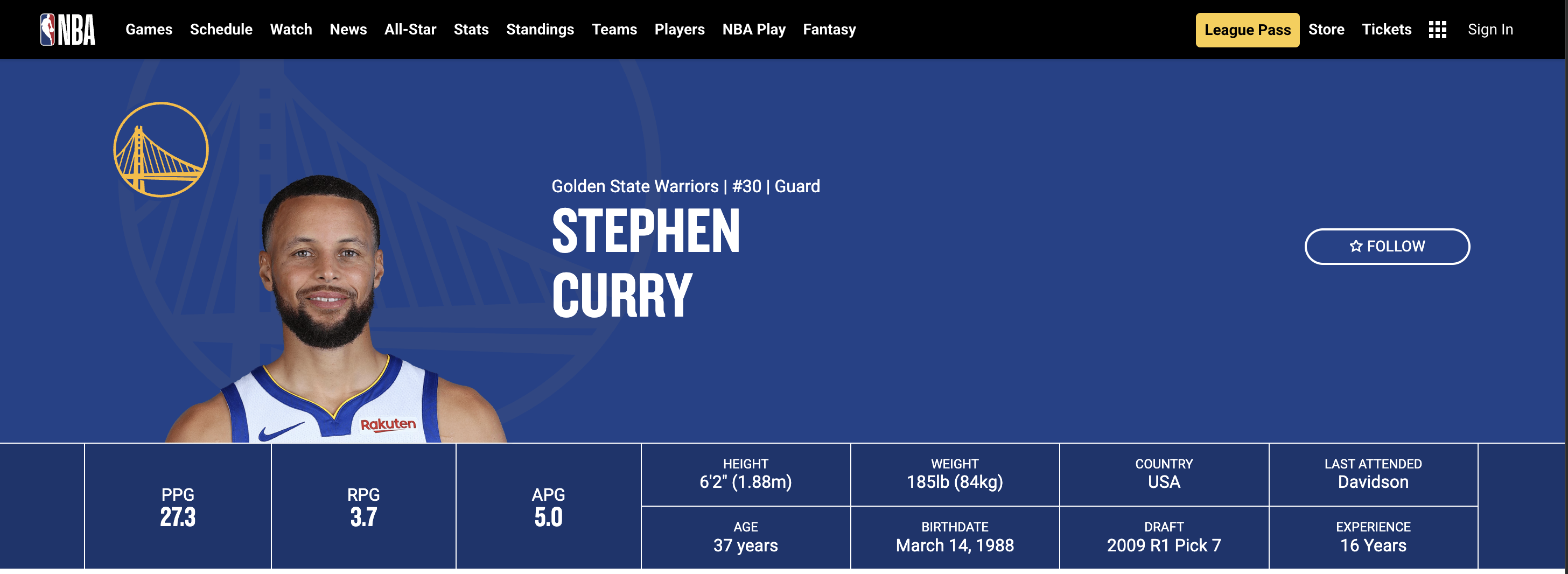
This source is used to identify Stephen Curry’s personal background and official player information, including team, position, physical attributes, and career details.
Data source: NBA.com – Stephen Curry Player Profile
Personal Information
Player Details
In-Depth Example: Stephen Curry's 2025-2026 Season
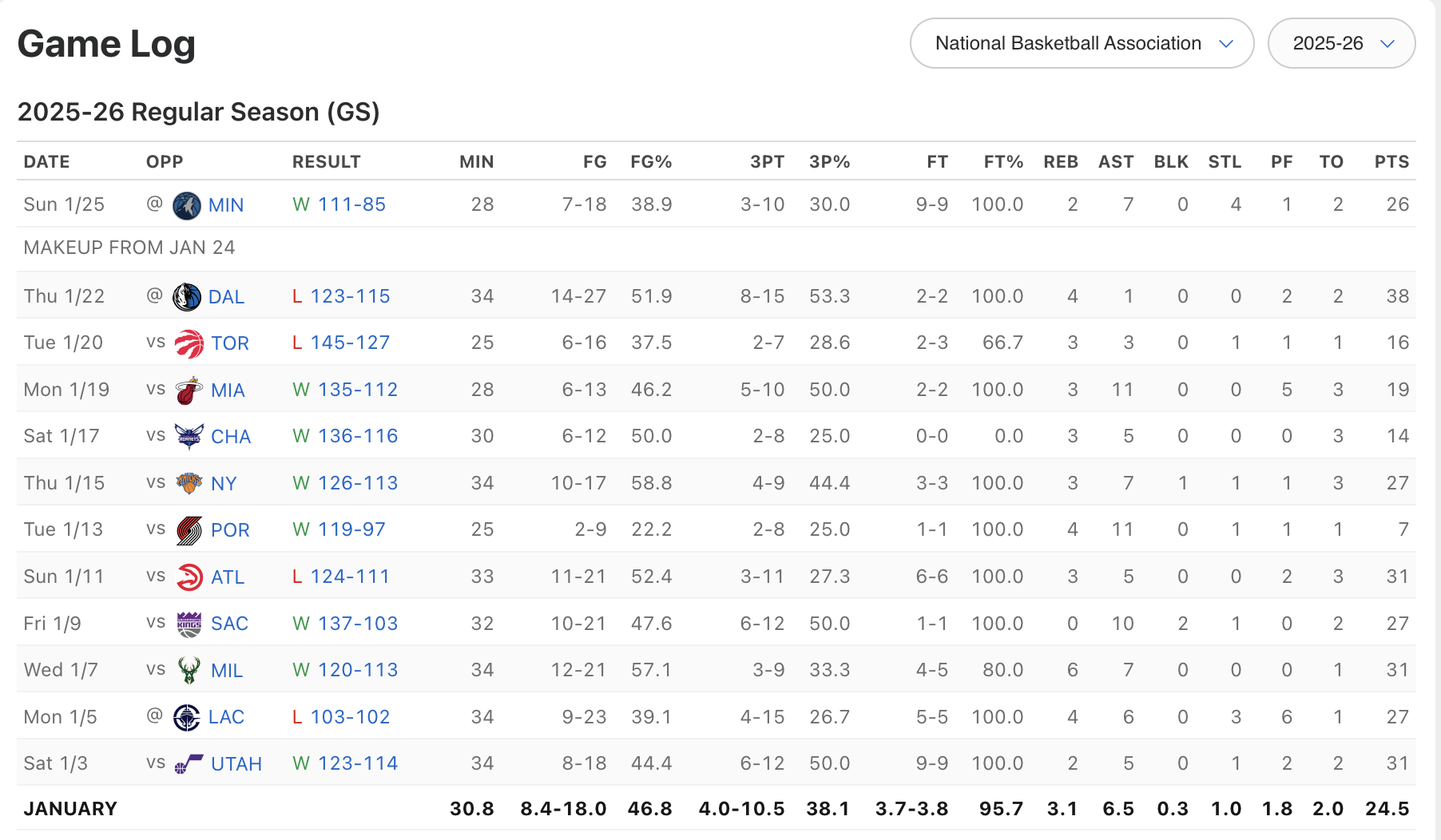 Sample game log data showing Curry's recent performances
This source is used to analyze Stephen Curry’s game-by-game performance, identify scoring consistency, and observe trends in shooting efficiency throughout the 2025–2026 season.
Data source: ESPN Stephen Curry Game Log
Key Statistics (Through 45 Games)
Scoring
Shooting Volume
Other Stats
Sample Insights from the Data
Insight 1: Elite Three-Point Shooting
Curry makes 42.8% of his threes while taking 9.8 per game. This is the best combination of volume and accuracy in the NBA. About 61% of his shots are three-pointers, showing how important his shooting is to the Warriors.
Insight 2: Consistent High Performance
Looking at the game log, Curry scores 25-38 points most games. His shooting percentages stay high even when taking difficult shots. This shows he's reliable and efficient.
Insight 3: Complete Offensive Player
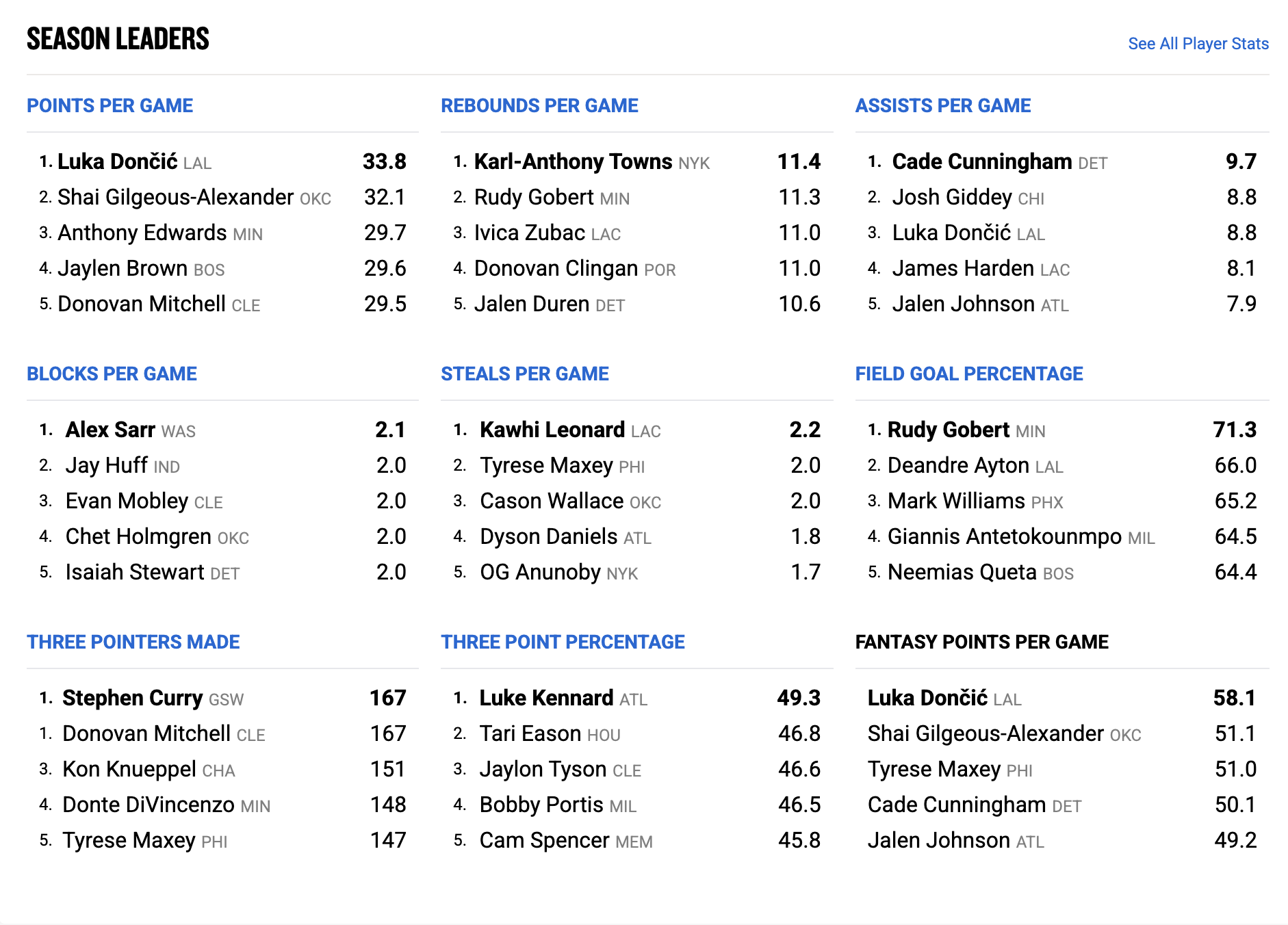
Curry averages 6.9 assists per game, showing he's not just a shooter. He creates plays for teammates while still being the main scorer. His 28.7 points per game ranks 5th in the league.
Web Sources for NBA Player Data
Here are three reliable sources for researching NBA player performance:

NBA.com Official Statistics
https://www.nba.com/stats/playersThe official NBA website provides comprehensive player statistics, game logs, and advanced metrics.

ESPN NBA Player Profiles
https://www.espn.com/nba/player/_/id/3975/stephen-curry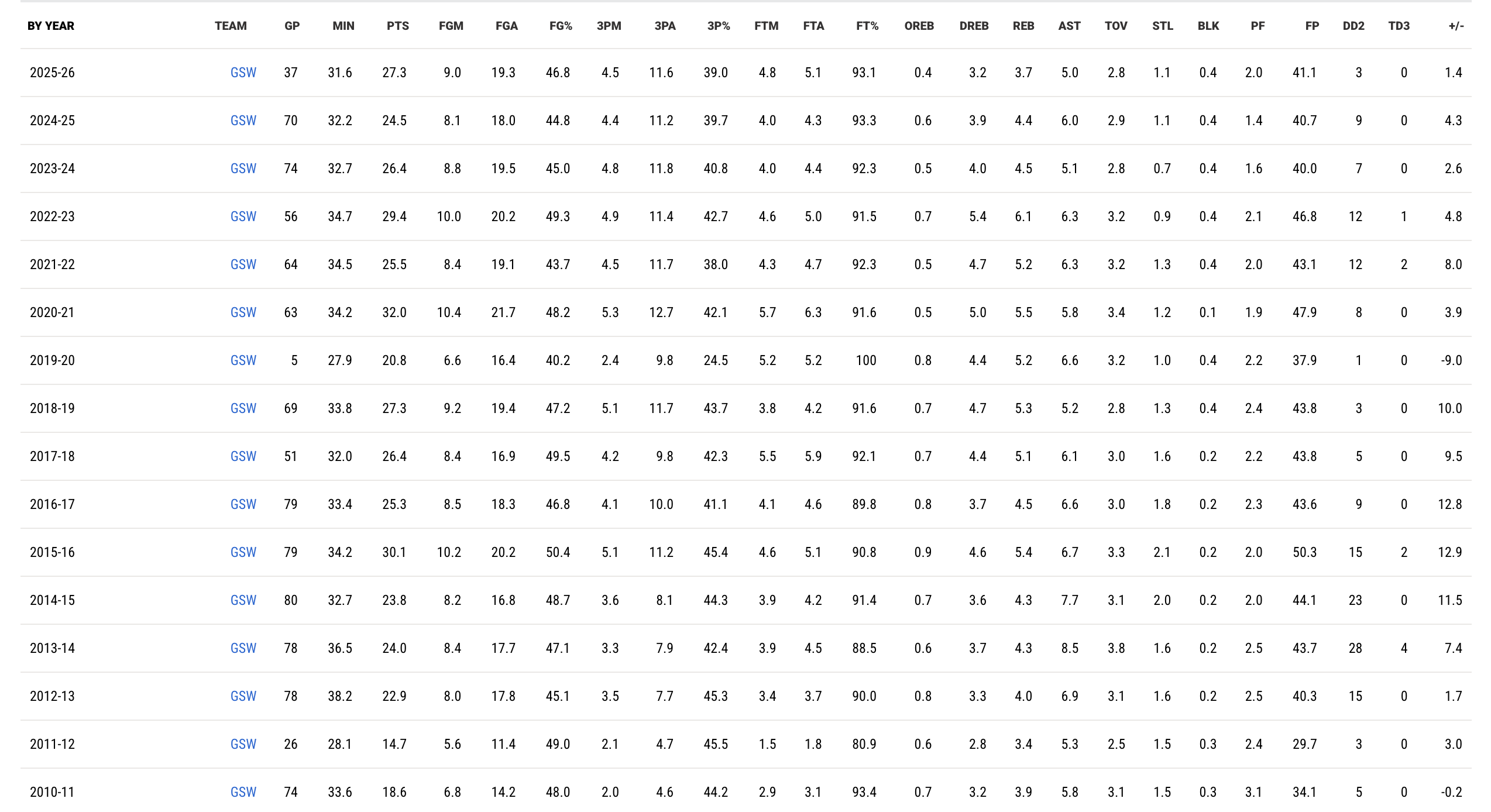

Basketball Reference
https://www.basketball-reference.com/players/c/curryst01.html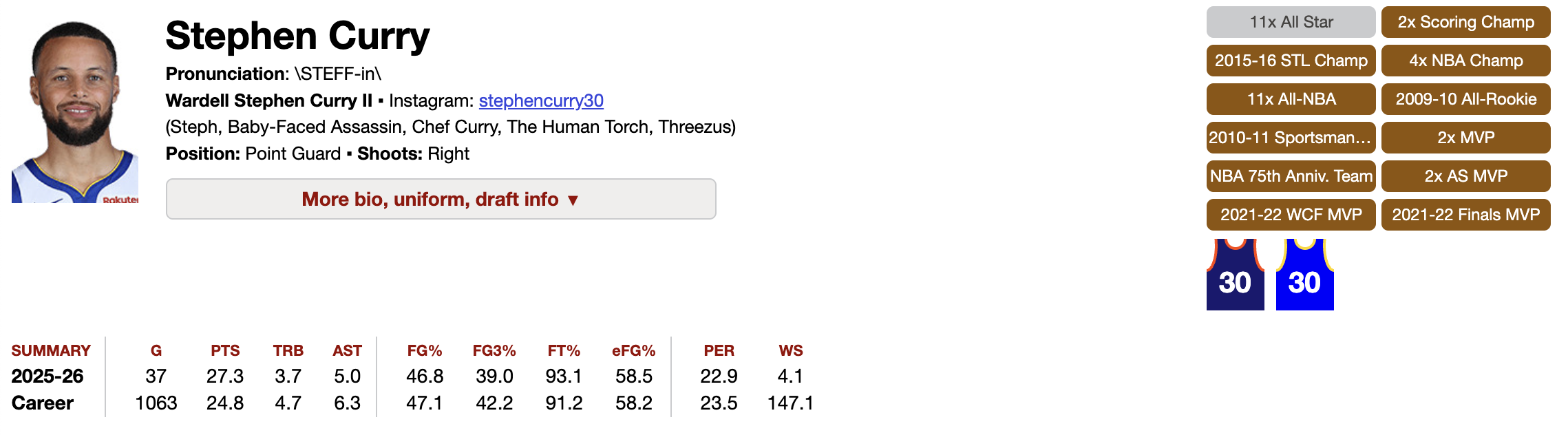
How to Research and Find Insights
Step 1: Start with Basic Stats
Look at points, rebounds, assists, and shooting percentages. Compare current season to career averages to see if the player is improving or declining.
Step 2: Examine Game Logs
Review game-by-game data to find patterns. Look for:
- Consistency in scoring
- Performance against different teams
- Trends over time (getting better or worse)
Step 3: Use Advanced Metrics
Advanced stats help you understand impact beyond basic numbers:
- True Shooting %: Measures overall shooting efficiency
- Player Efficiency Rating (PER): Overall performance rating
- Plus/Minus: Team performance when player is on court
- Usage Rate: How much the team relies on the player
Step 4: Compare to Other Players
See where the player ranks in the league. Compare shooting percentages, scoring averages, and advanced metrics to understand their relative performance.
Step 5: Draw Conclusions
Combine all the data to answer questions like:
- Is the player efficient or just high-volume?
- How does their current season compare to their career?
- What are their strengths and weaknesses?
- How valuable are they to their team?
Key Takeaways
What You Can Learn
By using these resources, you can understand a player's performance beyond just points per game. You can see efficiency, consistency, impact on team success, and how they compare to other players. This helps you make informed judgments about player value and performance.